

Introduction
Your salary is three weeks late, or a termination letter has just landed in your inbox. Maybe you are an employer facing a resignation dispute and unsure what the contract actually allows. These are the moments when people start searching for a labour legal advisor, usually in a hurry and often without knowing what to ask.
This guide explains what a labour legal advisor does in the UAE, when it makes sense to involve one, and how to prepare so your first conversation is productive. It focuses on mainland private-sector employment, which is where most disputes arise.
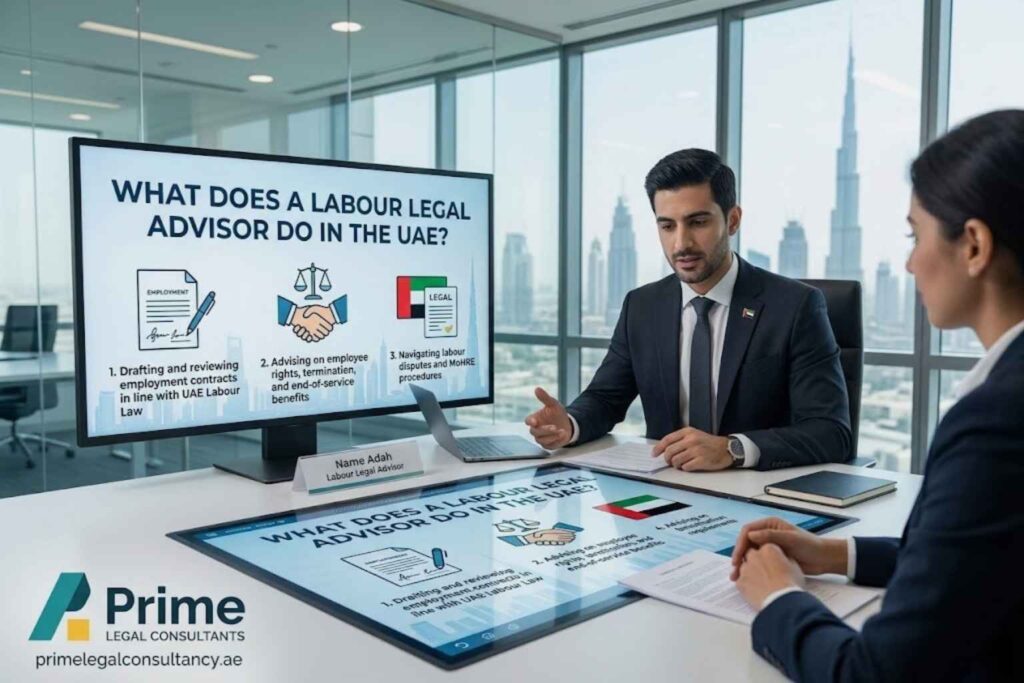
What Does a Labour Legal Advisor Do in the UAE?
A labour legal advisor is a professional who helps employees and employers understand their position under UAE employment law and choose a sensible next step. That might mean reviewing a contract, explaining what an employer owes on termination, drafting a response to a notice, or preparing a complaint for the Ministry of Human Resources and Emiratisation (MOHRE).
Titles vary. You will see labour law consultant, employment law advisor and labour lawyer in Dubai used almost interchangeably. What matters is who can actually represent you. Advice and document review can come from a consultancy, but appearing before the labour courts is generally done by licensed legal practitioners, so ask about this upfront.
When Should You Consult a Labour Legal Advisor?
Not every workplace disagreement needs a lawyer. A simple payslip error is often fixed with one email to HR.
Professional advice becomes worthwhile when:
- Salary has been unpaid or repeatedly delayed.
- You have been terminated and the reason or the payout looks wrong.
- You are asked to sign a settlement, resignation or waiver you do not fully understand.
- An employer wants to dismiss someone and needs to avoid a wrongful termination claim.
- The matter has already reached MOHRE or the courts.
The earlier you ask, the more options you usually have. Time limits apply to labour claims, so waiting months “to see what happens” can hurt you.

Common Employment Issues That Need Legal Advice
Unpaid salaries and delayed payments
Employers must pay wages on time, and payment through the Wage Protection System is the standard route for most private companies. If wages stop, an employee can raise a complaint with MOHRE. Keep every payslip and bank statement, because the dispute will turn on what was actually paid.
Wrongful or disputed termination
Under the current law, an employer may end a contract in specific circumstances and normally has to follow the notice requirements. Dismissal without a valid reason can lead to a compensation claim, and a tribunal looks at the facts of each case. Nothing about it is automatic, and no adviser can honestly promise a particular outcome.
Employment contracts and notice periods
The contract is the starting point for almost everything. The notice period is set by agreement within the limits of the law (generally between 30 and 90 days). Resigning without serving it, or an employer skipping it, can carry financial consequences. Reading the clause before acting is the cheapest legal advice you will ever get.
End-of-service benefits
Employees who complete the qualifying period of continuous service are generally entitled to gratuity, calculated on basic salary and years of service. Disputes often arise over what counts as “basic salary” and how unused leave is treated, so check your calculation against the contract.
Employer compliance
For employers, a good adviser works in the background: compliant contracts, clear policies, proper documentation of warnings and performance issues. Most costly disputes started with a missing paper trail.
How a Labour Dispute Usually Works in the UAE
For mainland private-sector disputes, the process generally starts with MOHRE, which tries to settle the matter between the parties. If no settlement is reached, the case can be referred to the labour court. Smaller claims may be handled faster than larger ones.
A practical sequence looks like this:
- Read your contract and note the salary, notice, leave and termination clauses.
- Collect evidence such as payslips, messages, emails and the termination letter.
- Try to resolve it in writing with a short, factual message to the employer or HR.
- File a MOHRE complaint if that fails, using the channels MOHRE currently provides.
- Get advice before signing any settlement or going to court.
Free zones like DIFC and ADGM, government employees and domestic workers follow different rules, so confirm which regime applies to you before relying on any general guide, including this one.
Documents to Prepare Before Your Consultation
Bring what you have, even if it feels incomplete:
- Signed employment contract and any amendments
- Offer letter and labour card or work permit details
- Payslips and bank statements
- Termination or resignation letters
- Relevant emails and WhatsApp messages
- Leave records and a short timeline of events
A one-page timeline is surprisingly helpful. It saves consultation time and keeps you from forgetting details that matter.

How to Choose the Right Labour Legal Advisor
Look for experience in UAE employment matters specifically, not just general legal work. Ask who will handle your file, whether they can represent you in labour proceedings, and how fees are structured. Be cautious of anyone who guarantees you will win.
A good first consultation should tell you where you stand, what the realistic options are, and what the likely costs and timeline look like. It cannot tell you the final outcome, since that depends on evidence and the decision-maker.
Also Read: Legal Aid for Business Contracts and Compliance
FAQ About Labour Legal Advisor
Q1: How can I contact the UAE labor law authority?
Ans: You can contact the UAE Ministry of Human Resources and Emiratisation (MOHRE) through its official website, mobile app, or helpline at 600 590 000 for employment-related guidance.
Q2: What is the minimum salary in UAE labour law?
Ans: The UAE Labour Law does not set a universal minimum salary for all private-sector employees; applicable requirements may vary by employee category and current regulations.
Q3: Who is the best legal recruiter in Dubai?
Ans: The best legal recruiter in Dubai should have a strong track record in legal placements, knowledge of UAE employment requirements, and experience recruiting qualified legal professionals.
Q4: How do I file a labor complaint in the UAE?
Ans: You can file a labour complaint through MOHRE’s official website, app, or helpline; keep your employment contract, salary records, and relevant evidence ready to support your claim.
Conclusion
Most labour problems become harder when they are ignored and easier when they are documented early. Whether you are an employee or an employer, a good labour legal advisor helps you see your options clearly before you commit to one. If you would like to discuss your situation, you can get in touch with Prime Legal Consultancy for an initial consultation.
This article provides general information, not legal advice for your specific circumstances. Laws and procedures change, so confirm current requirements with MOHRE or a qualified professional.