

Introduction
Registering a company in Dubai is rarely hard because of one big obstacle. It gets hard because of many small decisions made in the wrong order: the licence type, the legal structure, the office, the visas. Company registration services Dubai exist to sort these out before you pay for the wrong setup. This guide explains what these services cover, how the process works, and where founders usually lose time and money.

What company registration services actually include
A good provider does more than submit forms. Typically the work covers:
- advising on legal structure and jurisdiction
- reserving the trade name
- matching your activity to the correct licence
- drafting the memorandum of association (MOA)
- coordinating initial approvals and the final licence
- supporting visa applications, bank account opening and tax registration
Some of these are optional. A consultant can handle them, but you can also do some yourself.
Mainland, free zone or offshore: which one fits?
Mainland companies are licensed by Dubai’s Department of Economy and Tourism (DET). Free zone companies are licensed by the individual zone authority. Offshore companies are mainly used for holding assets and cannot normally trade locally.
| Mainland | Free zone | Offshore | |
|---|---|---|---|
| Licensing body | DET | Zone authority | Offshore authority |
| Trade across the UAE | Yes | Restricted, with extra permits | Generally no |
| Office | Usually required | Usually within the zone | Often none |
| Best for | Local clients, retail, contracting | Export, services, holding | Asset holding |
Ownership is less of a dividing line than it used to be. Free zones have long allowed 100% foreign ownership, and Dubai now permits it on the mainland for over 1,000 activities, excluding activities with strategic impact. Check your specific activity.
A hypothetical example: a consultant serving clients in Europe may do fine in a free zone. A cafe owner who needs a street-front location must go mainland. A consultant who later wins Dubai government clients may need a mainland licence or a dual licence anyway.
For official comparisons, see the Dubai government’s company set-up options and free zones overview.
How the Dubai company registration process works
The order below is typical. Details vary by authority.
- Choose your activity. This decides the licence type (commercial, professional or industrial) and sometimes the allowed structure.
- Select jurisdiction and legal form. For example, LLC or branch on the mainland, FZCO or FZE in a free zone.
- Reserve the trade name. Names must follow naming rules, so avoid anything offensive or misleading.
- Get initial approval. The authority confirms your activity and structure. Some activities also need approval from a regulator, such as health or education bodies.
- Draft and sign the MOA or equivalent.
- Secure office space. This is often a lease or a flexi-desk, depending on the authority.
- Pay fees and receive the licence.
- Handle establishment cards, visas, bank account and tax registration.
Dubai also runs a Dubai Unified Licence programme, which is worth reading about if your business operates across jurisdictions.

Documents usually required
Requirements differ by nationality, activity and authority. Common items include:
- passport copies for shareholders and managers
- passport photos and proof of address
- Emirates ID and visa copies, if already resident
- for corporate shareholders: incorporation documents, often attested
- a business plan, if the authority asks for one
- additional regulator approvals for restricted activities
Always confirm the current list with the authority before paying anyone.
What affects the total cost
I won’t quote a number here, because figures change and depend heavily on your setup. These are the factors:
| Cost component | What changes it |
|---|---|
| Licence fee | Activity, number of activities, authority |
| Registration and approvals | Jurisdiction, regulator involvement |
| Office or flexi-desk | Location, size, whether the authority requires a lease |
| Visas and Emirates ID | Number of visas, office size or quota |
| Service fees | Provider, scope of support |
| Renewals | Licence renewal and lease renewal each year |
When comparing quotes, ask what is excluded. A cheap package that leaves out the office lease or visas often ends up costing more.
Licence, visa, bank account and tax: four separate things
Many first-time founders assume one approval covers everything. It doesn’t.
- The licence lets you operate legally in your activity. It does not guarantee a visa.
- Visa eligibility depends on the authority’s rules, your office arrangement and your own profile.
- A corporate bank account is a decision made by the bank, not the licensing authority. Banks run their own checks, and incorporation does not guarantee approval.
- Tax registration is separate again. The UAE charges 9% corporate tax on taxable income above AED 375,000, and companies must register with the Federal Tax Authority. A free zone licence does not make a company automatically tax-free. A 0% rate applies only to qualifying income of a Qualifying Free Zone Person. VAT registration becomes mandatory above AED 375,000 in taxable supplies. Confirm current thresholds on the FTA’s website.
Common mistakes that cause delays
- Choosing a free zone for price, then discovering it blocks the clients you need.
- Picking an activity that is too narrow, or too broad, for what you actually do.
- Assuming a foreign shareholder’s documents don’t need attestation.
- Ignoring regulator approvals for activities such as food, health or education.
- Treating the bank account as automatic and planning cash flow around it.
- Forgetting annual obligations: licence renewal, tax filings, and record-keeping.
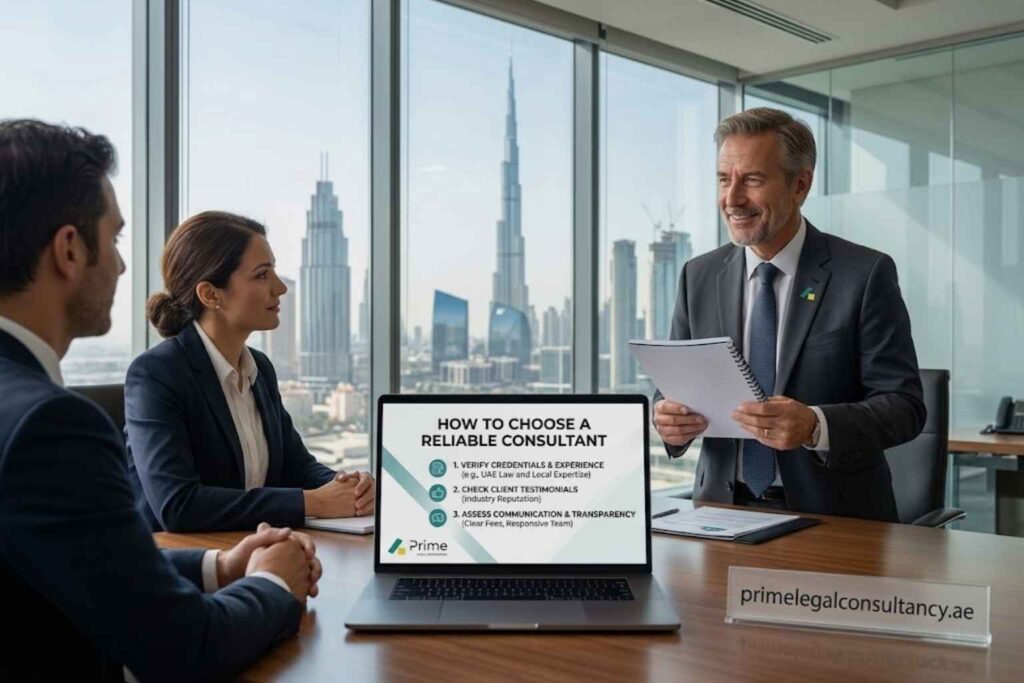
How to choose a reliable consultant
Ask for a written scope that lists what is included and what is not. Check that the provider explains alternatives rather than pushing one option. Be wary of “guaranteed approval” or fixed timelines. Confirm who pays government fees and how they are shown on the invoice. A good consultant will also tell you when your plan needs a different structure.
When legal support helps
Professional help is most useful when your situation is not simple: foreign corporate shareholders, regulated activities, multiple partners with different shares, or a plan to work across mainland and free zone. In those cases, drafting the MOA and shareholder terms carefully avoids disputes later.
FAQ About Company Registration Services Dubai
Q1: How much does it cost to register a company in Dubai?
Ans: Dubai company registration costs vary by business activity, licence type, jurisdiction, office requirements, and visa needs, so request a detailed quotation before proceeding.
Q2: How to earn 20,000 AED per month in Dubai?
Ans: You can target AED 20,000 monthly through a profitable business, real estate services, specialised consulting, or skilled employment, depending on your experience and market demand.
Q3: How do I register a company in the UAE from Pakistan?
Ans: Pakistani entrepreneurs can register a UAE company remotely through a mainland or free zone authority, subject to document verification, licensing requirements, and applicable immigration rules.
Q4: What business can I start with AED 50,000 in Dubai?
Ans: With AED 50,000, consider digital marketing, consulting, e-commerce, or other low-overhead services, while budgeting for licensing, operations, and any required visas.
Conclusion
Company registration services Dubai help entrepreneurs navigate business setup requirements, select a suitable company structure, prepare the necessary documents, and complete the relevant registration procedures. Understanding licensing options, registration costs, and compliance obligations can help you make informed decisions and avoid unnecessary delays.
Contact Prime Legal Consultancy for guidance on company registration in Dubai based on your business requirements. Speak with our team today to discuss your company formation needs and get support with the next steps.